

















Government borrowing fell sharply in December after a surge in income tax and national insurance receipts helped narrow the monthly deficit, offering short-term relief for the Treasury but little comfort over the longer-term health of the public finances.
Figures published by the Office for National Statistics showed public sector borrowing fell to £11.6 billion in December, £7.1 billion lower than the same month a year earlier, a 38 per cent reduction.
The improvement was driven by a strong rise in revenues. Total tax receipts increased by £7.7 billion year-on-year to £94 billion, while public spending rose by a more modest £3.2 billion to £92.9 billion.
Tom Davies, senior statistician at the ONS, said the fall in borrowing reflected “receipts being up strongly on last year, whereas spending is only modestly higher”.
However, the broader fiscal picture remains stretched. Over the first nine months of the financial year, borrowing totalled £140.4 billion, only £300 million lower than the same period last year and still the third-highest April-to-December borrowing figure since records began in 1993.
Public sector debt now stands at 95.5 per cent of GDP, up from 35 per cent before the 2008 financial crisis and 0.9 percentage points higher than a year ago. Higher interest rates continue to exert pressure, with £9.1 billion spent servicing government debt in December alone.
Dennis Tatarkov, senior economist at KPMG UK, said rising debt interest costs remained a structural challenge despite the month-on-month improvement.
The figures come amid continued economic uncertainty, following years of shocks including Brexit, the pandemic, energy price volatility after Russia’s invasion of Ukraine, and the fallout from Liz Truss’s 2022 mini-Budget.
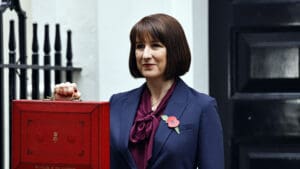
Chancellor Rachel Reeves has raised taxes by around £70 billion across her first two Budgets, but the ONS data suggests this has yet to materially reduce borrowing over the course of the year.
James Murray, chief secretary to the Treasury, said the government was “stabilising the economy, reducing borrowing and ensuring public services deliver value for money”.
Independent commentators were less convinced. Philly Ponniah, chartered wealth manager at Philly Financial, said December’s improvement should not be mistaken for a turning point.
“The UK is still running one of the largest peacetime deficits on record,” he said. “High debt limits future choices and reduces resilience when the next shock arrives.”
With inflation still above target and growth fragile, economists warn that sustained improvement will depend less on tax windfalls and more on long-term productivity and investment-led growth.
Read more:
Government borrowing falls on income tax windfall, but pressure on public finances remains