



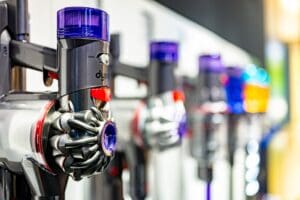



Dyson has reported a £440 million drop in annual sales after being hit by US trade tariffs, although the group managed to increase profits through cost-cutting measures and operational efficiencies.
The company said revenues fell from £6.57 billion to £6.13 billion in 2025, marking a second consecutive year of decline following more than two decades of uninterrupted growth. The downturn was attributed to a combination of weaker consumer confidence in key markets, currency fluctuations and the impact of tariffs introduced under Donald Trump.
The US levies targeted imports from countries including Malaysia and the Philippines, where Dyson manufactures a significant proportion of its products. Tariffs initially reached as high as 24 per cent before being reduced, but still had a material impact on the company’s ability to compete on price in one of its most important markets.
Dyson responded by increasing prices in the US, citing broader global economic pressures, which in turn contributed to softer demand.
Chief executive Hanno Kirner described the tariffs as “particularly damaging”, noting that they had disrupted sales momentum at a time when consumer sentiment was already fragile across major economies including the US, Germany and China.
Despite the drop in sales, Dyson’s profitability improved significantly. Operating profits rose from £520 million to £600 million, while earnings before interest, tax, depreciation and amortisation (EBITDA) increased from £940 million to £1.1 billion.
The improvement was largely driven by a programme of cost reductions, including job cuts implemented in 2024, when the company reduced its UK workforce by around 1,000 roles.
The results underline Dyson’s ability to protect margins even in challenging trading conditions, reflecting a disciplined approach to cost management and pricing.
The company maintained a strong focus on product development, investing £400 million in research and development and launching a record number of new products during the year.
James Dyson said the business remains committed to innovation as a key differentiator in increasingly competitive markets.
Dyson has expanded beyond its core vacuum cleaner business into categories such as haircare, air purification and robotics, where it is competing with both established brands and lower-cost entrants.
The company is also integrating artificial intelligence into its product range, including new robotic cleaning systems capable of identifying and removing stains, as it seeks to maintain a technological edge.
Now headquartered in Singapore, Dyson continues to operate in more than 80 markets worldwide, with growth in the UK partially offsetting declines elsewhere.
Kirner said the company plans to broaden its product offering further, introducing devices at a wider range of price points to reach more consumers.
The results highlight the challenges facing global manufacturers in an increasingly fragmented trade environment, where tariffs and geopolitical tensions can have a direct impact on supply chains and pricing.
For Dyson, the combination of strong profitability and continued investment suggests resilience, but the decline in sales underscores the pressure on consumer demand and the risks associated with global trade disputes.
As the company navigates these headwinds, its ability to balance innovation, cost control and market expansion will be critical in determining whether it can return to sustained revenue growth.
Read more:
Dyson hit by £440m sales drop as Trump tariffs bite